
♦ Difference between Direct & Indirect Tax
Direct Tax

Tax directly paid by taxpayer on his income
Indirect Tax

Tax collected by taxpayer from customer and paid to government.
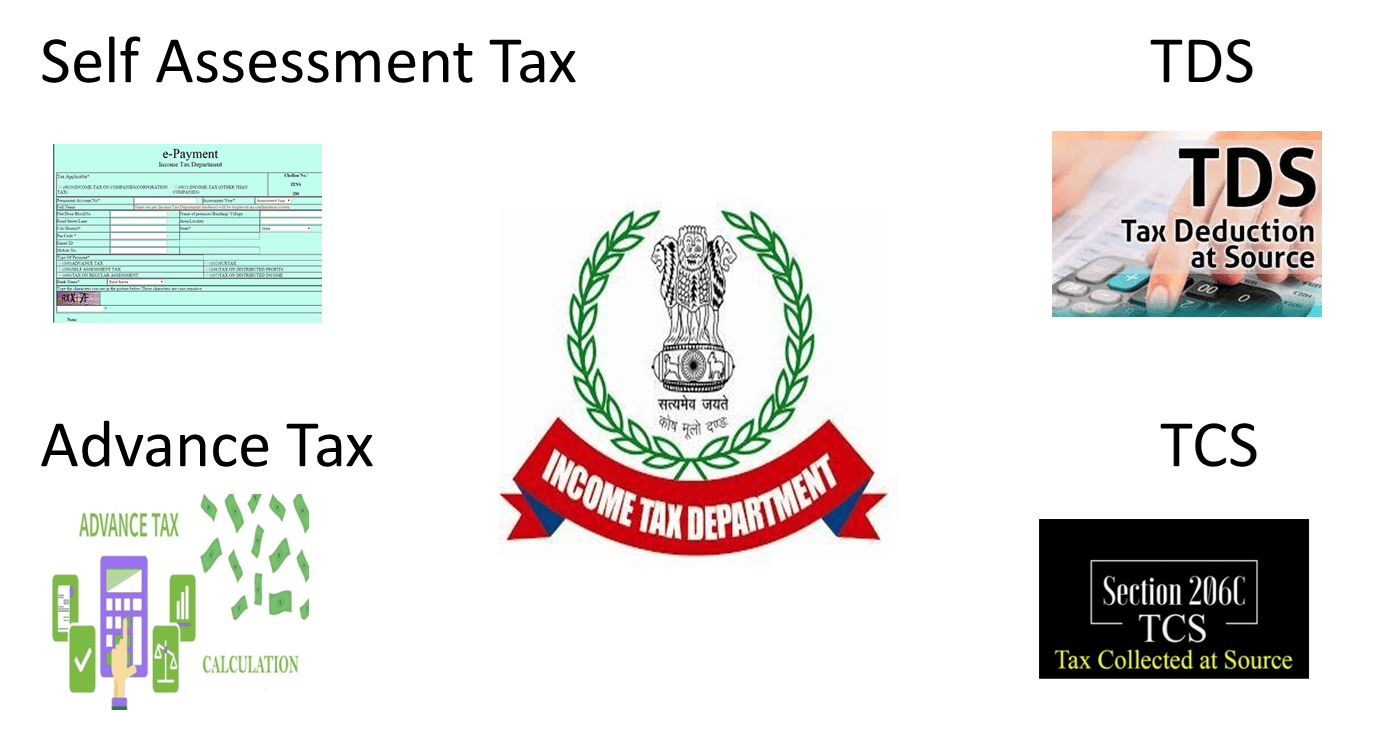
♦ Direct Tax System
♦ Need of TDS

♦ Introduction to Direct Tax System

♦ What is TDS
TDS stands for ‘Tax Deducted at Source’.
TDS is a system introduced by Income Tax Department, where person responsible for making specified payments such as salary, Commission, professional fees, interest, rent, etc. is liable to deduct a certain percentage of tax before making payment in full to the receiver of the payment.

♦ Who is the Deductor and who is the Deductee?
Deductor– The person who is making the payment is responsible for deducting the tax and depositing the same with government
Deductee– The person who receives the payment after the tax deduction is called ‘Deductee’.

Illustration 1
Voxcov Ltd Provides Professional Services to DLF Ltd. for ₹ 10,000/- 
In this case the DLF Ltd is the person responsible for deduction of tax.
And Voxcov Ltd is the person who receives the payment after tax deduction.
Suppose in above example TDS @ 10% is to be deducted.

♦ Responsibilities of Deductor
- Timely deduction of TDS
- Make Payment
- Deposit of TDS
- Quarterly Return Filing
- Issue of TDS Certificates
♦ Responsibilities of Deductee
- Firstly issue bill
- Collection of Payment
- Collection of TDS Certificates
- Adjust TDS With Income Tax liability
♦ Difference between Income Tax and TDS

♦ Concept of Financial Year & Assessment Year
